Four papers show up again and again in a food business: greaseproof, parchment, wax, and butcher paper. They can look almost identical stacked on a shelf, and they get swapped for one another constantly, usually by someone who then wonders why the sheet stuck to the pan or melted onto a brownie. They are not interchangeable. Each is built for a different combination of heat, grease, and moisture, and picking the wrong one is the difference between a clean release and a ruined tray. Here is what actually separates them and how to choose without second-guessing.
Greaseproof paper: the wrap-and-serve specialist
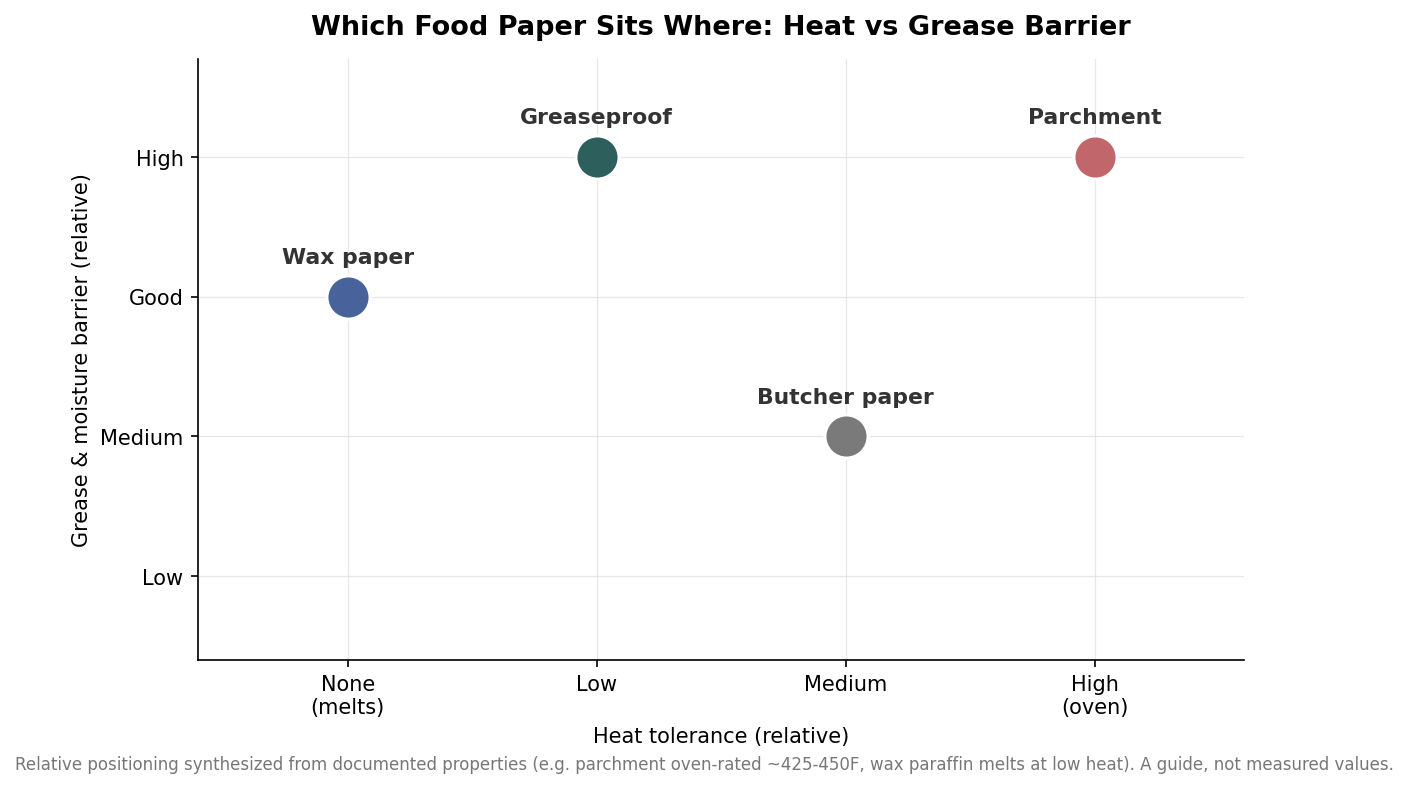
Greaseproof paper earns its name through how it is made, not through a coating. The pulp is heavily refined and calendered so the fibers pack tightly, forming a natural barrier that oil struggles to pass through. That means no wax, no silicone, and a clean, food-safe surface that takes printing well, which is why it is the standard for branded deli sheets, basket liners, sandwich wraps, and takeaway. The trade-off is that the barrier is physical, not chemical: over long contact with very wet or very oily food it will eventually absorb some moisture, and it is not designed for sustained oven heat. Weights are typically light, often in the rough range of 30 to 50 gsm depending on the format, though that figure is indicative and varies by supplier. If your job is to hold, wrap, line, and brand food at serving temperature, this is the paper built for it.
Parchment paper: the one built for the oven
Parchment is the paper you bake on, and the reason is a food-safe silicone coating bonded to treated cellulose fibers. That coating does two things greaseproof cannot: it releases stuck food cleanly and it tolerates real oven heat, commonly rated to around 425 to 450°F (about 232°C). Cookies lift off without tearing, roasting vegetables do not weld to the tray, and cleanup is trivial. What parchment is not is a branding surface. The silicone that makes it non-stick also makes it a poor candidate for the kind of printed, under-the-food presentation greaseproof handles so well, and using it purely to wrap a cold sandwich is overkill you are paying for. Reach for parchment when the paper is going into the oven; skip it when it is not.
Wax paper: cold jobs only
Wax paper looks like a cheaper parchment and behaves nothing like it. Its slick surface comes from a paraffin wax coating, and paraffin softens and melts at low temperatures, well below baking heat. Put wax paper in a hot oven and the coating melts and can smoke, which is exactly why it belongs to cold and room-temperature tasks: separating burger patties or cookie-dough layers, wrapping a sandwich for a few hours, lining a container, rolling out candy. There is one narrow exception worth knowing: wax paper can line a cake or brownie pan if the batter completely covers it, because the food shields the wax from direct heat. Outside that specific case, treat wax paper as a storage-and-wrapping material and keep it away from the oven entirely.
Butcher paper: breathable, not grease-proof
Butcher paper is the odd one out, because it is not really trying to be a grease barrier at all. It is an uncoated, unwaxed kraft paper, and the pink or peach version that barbecue cooks favor is prized precisely because it is breathable. Wrap a brisket in it at smoker temperatures, commonly in the 250 to 275°F range, and steam escapes rather than pooling, so the bark stays firm while the meat keeps some moisture, something neither foil nor a coated paper can do. It is also the classic table covering and a sturdy wrap for cuts at the counter. What it will not do is stop grease the way greaseproof does; kraft fibers absorb oil, so a burger sitting on plain butcher paper will leave a spreading stain. Rolls are heavier stock, often around 60 gsm and sold in long widths like 18 inches by 175 feet. Choose it for smoking, resting meat, and covering surfaces, not for holding greasy food on a plate.
How to choose without overthinking it
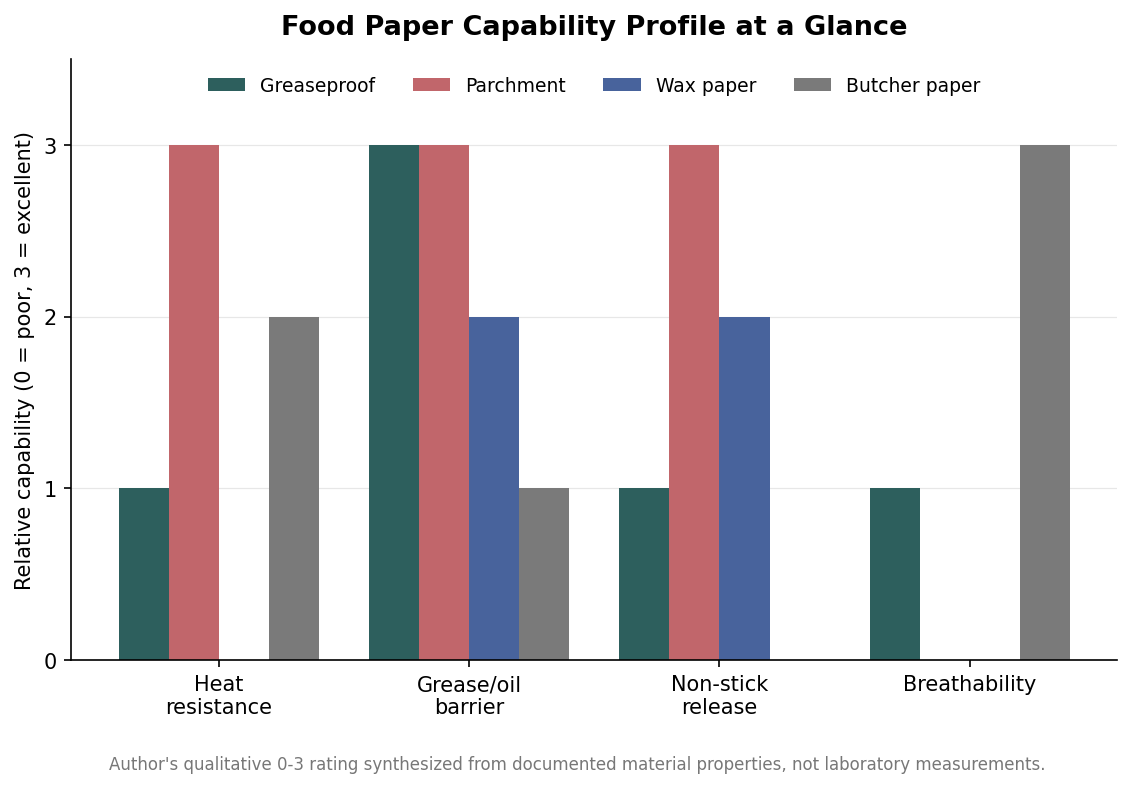
Strip away the marketing and the decision comes down to a single question: what is the paper being asked to survive? If it goes in the oven, you want parchment for its silicone coating and heat rating. If the job is cold storage or separating layers, wax paper is the cheap, correct answer. If you are smoking or resting meat, or covering a table, butcher paper’s breathability is the whole point. And if you are wrapping, lining, or serving food at temperature, and especially if you want your logo under it, greaseproof is the printable workhorse that does that job better than any of the other three. The capability profile above lays the four side by side so the pattern is obvious: no paper wins every category, and the “best” one is simply whichever matches the task in front of you.
The common mistakes all come from ignoring that question. People bake on wax paper and get smoke, they wrap greasy food in butcher paper and get stains, and they pay for parchment to wrap a cold sandwich a plain greaseproof sheet would have handled for a fraction of the cost. Match the paper to the heat and the grease it will actually see, and each one quietly does exactly what it was designed to do.
Leave a Reply